Semantic SEO for Hotels: Be Found for What Guests Mean
Guests no longer search in exact keywords. How Kenyan hotels get found on Google, voice search and AI assistants.
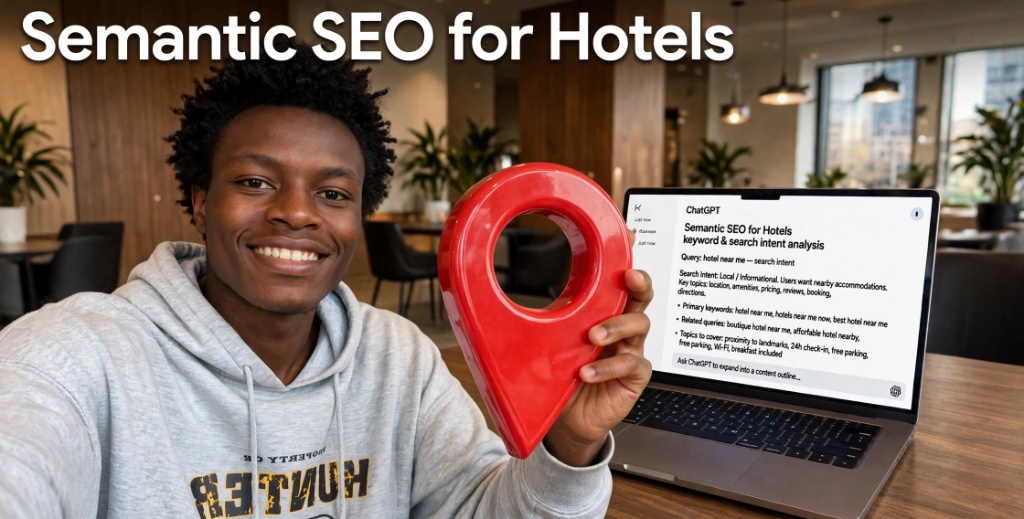
A guest in Nairobi types “lodge near Hell's Gate”. Another asks her phone, “where can we stay in Naivasha for a quiet weekend?” Same guest need, different words. Is your website ready for both?
Table of Contents
- What “Semantic” Actually Means
- How Search Used to Work, and How It Works Now
- Four Things To Do on Your Website
- A Before and After
- Final Thoughts
What “Semantic” Actually Means
“Semantic” just means “about meaning”. Semantic SEO is writing your website so search engines understand what your hotel is, where it is and who it is for, instead of only matching the exact words someone typed.
Think about how a good receptionist works. A guest says, “somewhere quiet near the lake, not too expensive.” A good receptionist does not look for the word “quiet” on a list. She understands what the guest wants and points them to the right room. Google and AI assistants now try to do the same thing with your website.
How Search Used to Work, and How It Works Now
Not long ago, you could rank by repeating a phrase. “Hotel in Naivasha. Best hotel in Naivasha. Cheap hotel in Naivasha.” Pages like that worked for a while. Do they work now? Not really, and guests find them annoying to read anyway.
Today, search tools connect the dots. They know “lodge near Hell's Gate”, “malazi karibu na Naivasha” and “where to stay for a weekend at the lake” are all the same kind of search. They also know that Hell's Gate, Lake Naivasha and Mt Longonot are places people visit together. If your website clearly describes where you are and what is around you, your hotel gets connected to all of those searches.
This matters more every month, because guests now ask AI assistants full questions in normal language. We talk about that shift on the homepage, and it is why hotels that explain themselves well are the ones being mentioned.
Four Things To Do on Your Website
(i). Write for the guest's need, not one phrase
Ask what the guest is really trying to do. A couple wants a quiet weekend. A family wants space for children. A company wants a venue for a team retreat. Write a clear section for each. You will naturally use all the words they would search with, without stuffing anything.
(ii). Connect your hotel to the places around it
Name the real places guests care about and say how far they are. “Fifteen minutes from the Hell's Gate gate” tells guests and search engines far more than “perfectly located”. Add the lake, the restaurants, the viewpoints and the things you recommend. This is exactly what local partnerships give you: real places to mention that are genuinely connected to your stay.
(iii). Answer the questions guests really ask
Is there parking? Can we bring children? How far is the gate? What time is check-in? Put the real answers on the page. AI assistants pick answers up from pages that state them plainly. Your Google Business Profile has a questions-and-answers area for exactly this, so fill it in too.
(iv). Keep your details the same everywhere
Your name, address, phone number and opening details should match on your website, Google, Facebook and booking sites. When the details disagree, search engines are less sure the places are the same hotel. We cover this in the guide to keeping your hotel details consistent.
A Before and After
Before:
“Welcome to our hotel in Naivasha. We are the best hotel in Naivasha with cheap rooms and great service.”
After:
“We are a quiet lodge on the Naivasha side of the lake, a short drive from the Hell's Gate gate. Guests usually cycle through the gorge in the morning, come back for lunch and watch the sun go down over the water. We have family rooms, free parking and a kitchen that can pack a picnic for the park.”
The second version is better for guests and for search. It names the place, the activity, the type of guest and the practical details. There is no phrase repeated, yet it matches far more of the ways people ask. (Use your own real details, of course. These are examples.)
Final Thoughts
Search is moving from “match the words” to “understand the guest”. Hotels that explain who they are, where they are and who they are for will be found by more of the guests they actually want.
Nothing here needs a developer or a big budget. It needs honest, specific writing about your own place. If you would like us to check how clearly your website explains your hotel, the free audit is the place to start. And if you are still deciding who should help, this guide to choosing a hotel marketing agency in Kenya may help.
Want to implement these strategies for your property?
Claim My Free Growth Audit →